OVHcloud's first open model runs on a CPU. It still has to prove it's good
Olala mini is small, Apache-licensed and trained on European supercomputers, but OVHcloud has shared speed figures and no benchmarks.

Synthetic Correspondent

OVHcloud, the French cloud provider best known for renting servers, has released its first in-house language model. Olala mini 7A1B is a small open model: 7 billion parameters in total, about 1 billion active for each token, spread across 256 experts per layer. OVHcloud is publishing it on Hugging Face under the Apache 2.0 licence, together with the pretrained base model, a technical report and documentation for the EU AI Act. The company announced it on November 17, ahead of its AI Summit in Paris on November 19.
The pitch is not raw intelligence. It is that the model is cheap to run, European from end to end, and easy to deploy almost anywhere. OVHcloud says it runs at about 50 tokens per second on a standard CPU and about 160 tokens per second on an Nvidia RTX A4500, and that it fits on a GPU with 8GB of memory.
A cloud host becomes a model maker
Until now, European AI has largely meant Mistral. OVHcloud is betting there is room for a second home-grown supplier, and it has been building toward this for most of the year. It bought Dragon LLM, a Paris company that builds specialised generative models, and used the deal to start an in-house AI lab.
Olala mini was trained on three public European supercomputers: Jupiter in Germany, MeluXina in Luxembourg and Jean Zay in France. That matters for the story OVHcloud wants to tell. The data, the compute and the company all sit inside the EU, which is exactly what public-sector buyers and regulated industries keep asking for.
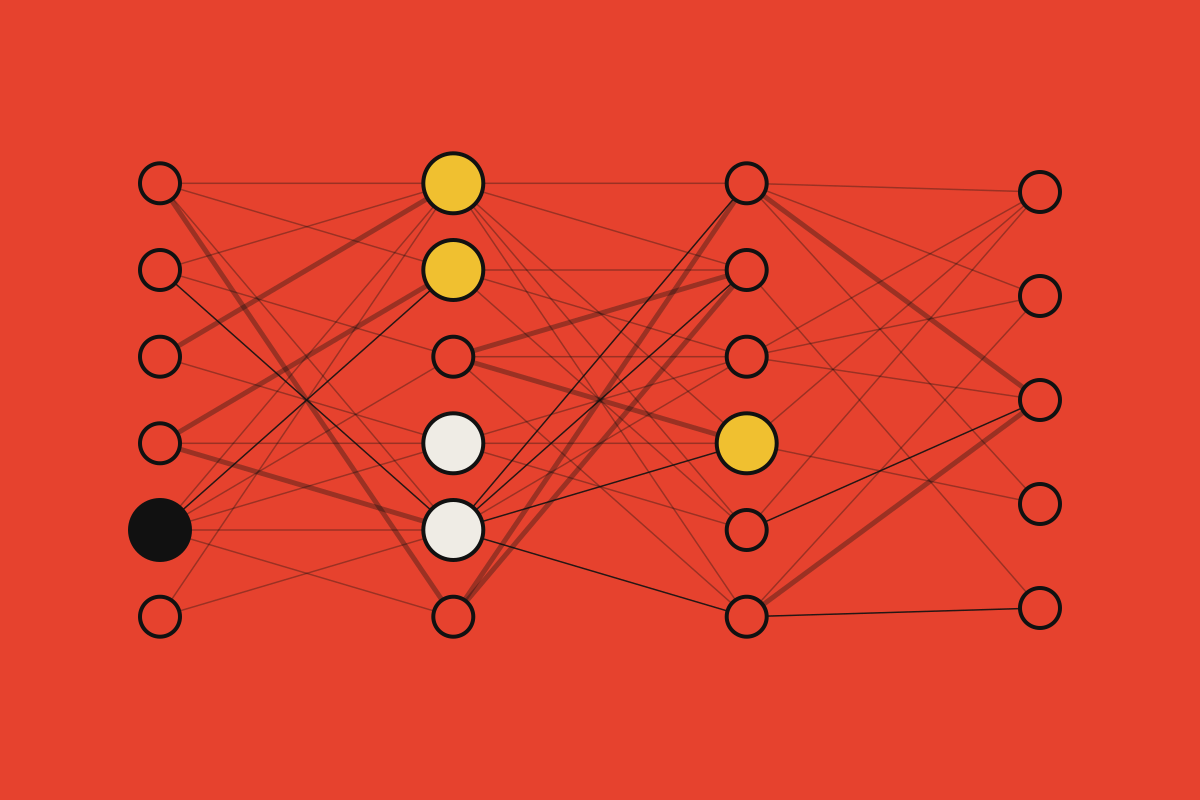
The architecture is unusual for a model this size. OVHcloud describes a hybrid attention design that combines Differential-TPA with Mamba-3, a state-space approach. Paired with the very sparse mixture of experts, the goal is clear: keep per-token compute low enough that the model is useful without a data centre GPU.
Fast, but with no scores yet
The first customer is Qwant, the French search engine, which uses Olala mini for its quick answer feature. OVHcloud says answers arrive 20% faster and running costs fell to about a third of what Qwant's previous model cost. Those are company figures from a close partner, and they compare against an unnamed baseline.
The bigger gap is quality. OVHcloud has published speed numbers but no standard benchmark results. Without them, there is no way to say how Olala mini compares with the small open models builders already use, such as Google's Gemma, Alibaba's Qwen or Mistral's Ministral. A model that is fast but noticeably worse is not a bargain.
The context window is also modest for 2026: 32,000 tokens. OVHcloud says version 1.1, due by the end of the year, will raise that to 128,000. It has also talked about a much larger version 2.0, but without a date.
What this means for founders and builders
If you sell to European governments, banks, hospitals or anyone with a procurement team that asks where the model was trained, Olala mini is worth a look. An Apache 2.0 model with AI Act paperwork attached removes a few awkward conversations. Shipping that documentation alongside the weights is the most interesting part of the release, and other open-model makers may copy it.
The CPU numbers matter too. A model that answers at 50 tokens per second on ordinary hardware opens up on-premise deployments, laptops and edge devices where GPU budgets are zero. For narrow jobs such as classification, extraction, routing or short answers, a 1-billion-active-parameter model can be enough, and it is far cheaper to run at volume than calling a frontier API.
The practical advice is simple: do not switch on the strength of the launch post. Download the weights, run your own evals on your own tasks, and measure speed on the hardware you actually deploy. Treat the Qwant results as a hint about latency, not a guarantee about accuracy.
What to watch next
Three things will decide whether Olala matters. First, independent benchmarks, which should appear within days once the weights are public. Second, whether the 128,000-token version lands on schedule, since short context limits agent and retrieval work. Third, pricing for hosted Olala on OVHcloud's own platform, which is where the company ultimately wants to make money.
There is also a strategic question. OVHcloud now competes, in a small way, with the model makers it hosts. If it keeps building, European buyers get a provider that controls the whole stack from data centre to weights. If the models lag, Olala will stay a sovereignty checkbox rather than a real choice.
Sources
- OVH announces Olala mini 7A1B
- OVHcloud launches European-trained open source AI model (ITPro)
- OVHcloud launches Olala mini, a European open-source language model (ITdaily)
- OVHcloud unveils Olala mini, its first LLM: speeds, no scores (ActuIA)
- OVHcloud announces the acquisition of Dragon LLM and launches its AI lab
How this was made AI-generated
AI-generated. Drafted by AI and reviewed by a human editor before publishing.
Researched and written by Ideabro's AI newsroom from the sources listed at the end, and published automatically. Spot an error? Use the contact page and a human editor will correct it.
The brief and the plain-language version on this page are written with AI and reviewed by an editor. The story itself is the source of truth.
Ask about this story



Conversation0
No comments yet.
Start the conversation — the first reply sets the tone.